

Before the Next Flood: How Houston Is Rebuilding Water Rescue Training
Two new facilities aim to give Greater Houston's first responders realistic swiftwater training close to home, before the next storm instead of during it.
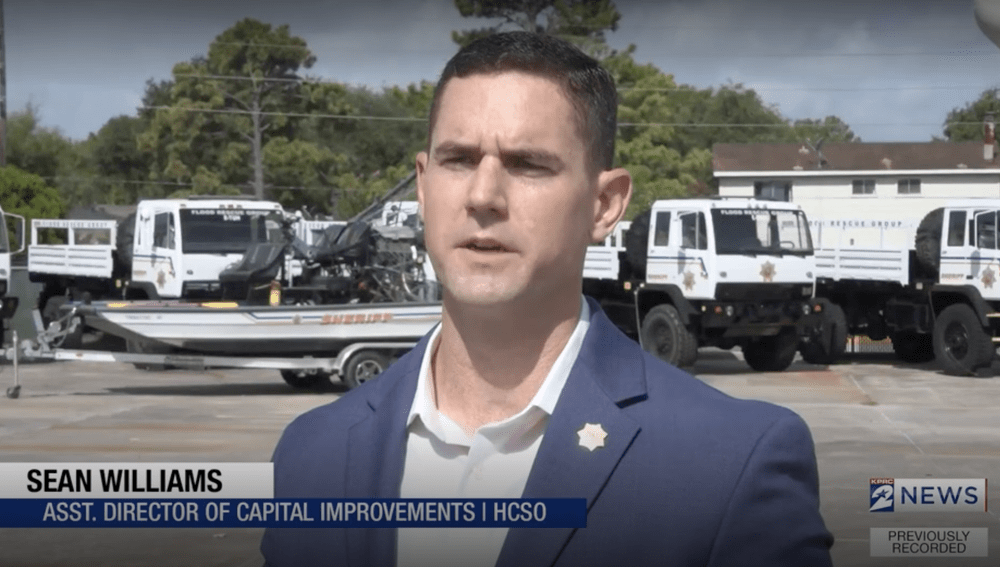
Sean Williams, assistant director of capital improvements, Harris County Sheriff's Office. Image: KPRC 2 / Click2Houston.
Few regions in the country run as many water rescues as Greater Houston. Yet for years, the deputies, firefighters and constables who perform them have had to leave the area to get specialized swiftwater training. That often meant days away from duty for each trip, and fewer people certified each year.
In August 2026, Harris County leaders broke ground on a project that changes that. KPRC 2 reports that the new Sheriff's Office facility is one piece of a broader push to make sure responders train, practice with their equipment and coordinate across agencies before the water rises.
The Gap Harvey Exposed
When Hurricane Harvey flooded the region in 2017, many responders were pulled into rescues without consistent hands-on swiftwater experience. They learned under live conditions, in dangerous water, with residents' lives on the line. County officials point to that experience as the reason dedicated local training became a priority.
Two Facilities, Two Roles
Two separate projects are now underway in the Houston area. They have different scopes, but together they give the region far more ways to train locally.
HCSO Swiftwater Rescue Training Facility
Harris County Sheriff's Office · 1731 Hugh Rd, Houston- Indoor, above-ground training tank, 40′ × 80′
- Deluge feature that moves trainees from flood conditions into swiftwater
- Training with high-water vehicles and rescue boats
- Up to 1,600 trainees per year
- Funded by the 2022 public safety bond; completion expected in 2027
STORM Ranch
Community Volunteer Fire Department & Harris Fort Bend ESD 100 · Mission Bend- $104 million, multi-scenario campus on about 27 acres
- Swiftwater channels, a boat-rescue pond and a dive tank
- An "urban village" with buildings that can be flooded for exercises
- Basic flood-preparedness courses planned for civilians
- Built in phases; phase one estimated at 18–22 months
Training, Equipment, Coordination
The KPRC 2 report frames the change around three things responders need before a storm hits:
- Training: repeated, hands-on practice with rescue technique, entrapment avoidance, swimming and teamwork in controlled conditions.
- Equipment: time with the actual high-water vehicles and boats crews will use in a real flood.
- Coordination: law enforcement, fire departments, military personnel and other partner agencies training side by side, so they already know each other's procedures when a disaster arrives.
Local access multiplies all three. Crews can train closer to home, get back on shift sooner and schedule sessions more often. Over time, that builds a much deeper bench of certified rescuers.
A Model for Other Regions
Houston isn't alone. Communities that see regular flooding are moving swiftwater training indoors, where water level, current and conditions can be set for every drill and training doesn't depend on the weather or the season.
Fathom Tanks has helped lead that shift. In 2020, Fathom trained more than 40 Harris County Sheriff's deputies at its indoor tank in Georgetown, Texas. Fathom also built the 140,000-gallon indoor tank at Fayetteville Technical Community College's Swift Water Rescue Training Facility in North Carolina, which now serves responders across the region. Each project points to the same lesson: when realistic training is close to home, more responders get it, and they get it more often.
Related Coverage
Sources
- KPRC 2: Before the next flood, Harris County is changing how rescues begin (Aug. 15, 2026)
- KPRC 2 video: Harris County breaks ground on new Swiftwater Training Facility (video still source)
- Harris County Sheriff's Office: Swiftwater Training Facility project page
- Harris County Office of the County Engineer: HCSO Swiftwater Rescue New Training Facility
- PGAL: HCSO Swift Water Training Facility
- KPRC 2: Harris County will become home to nation's largest flood rescue training facility (Oct. 31, 2025)
- Covering Katy: STORM Ranch site work begins
- Up & Coming Weekly: FTCC's state-of-the-art swift water rescue training center
- Associated Press: Deputies prepare for next hurricane with intense training (Aug. 23, 2020)